
What is Computational Fluid Dynamics (CFD) and Why You Need It
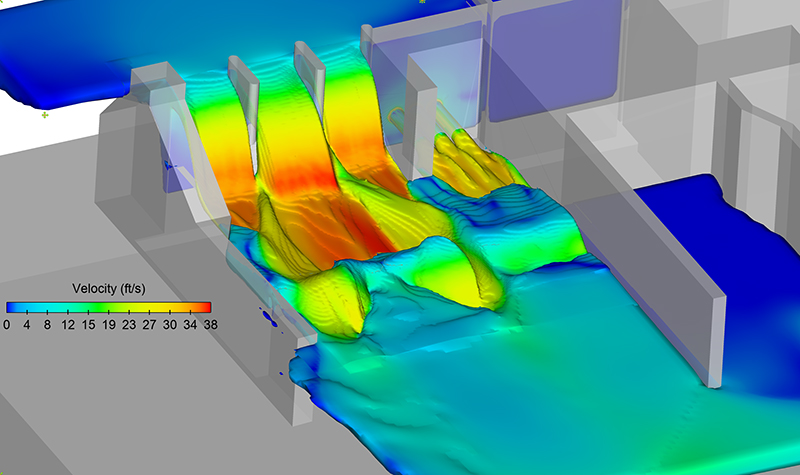
Computational fluid dynamics CFD software is a powerful tool that helps engineers study how fluids—like air, water, or gases—move and behave. Using computer simulations, engineers can predict and analyze complex problems without always needing expensive physical tests. From designing airplane wings and car bodies to improving HVAC systems and medical devices, CFD software allows professionals to explore different designs, save costs, and create better solutions faster. In this article, we will explain what computational fluid dynamics is, how it works, its advantages and limitations, and its use in real-world applications.
What Is Computational Fluid Dynamics?
The Basics of CFD
Computational Fluid Dynamics (CFD) uses computer models to simulate the flow of fluids and the transfer of heat. It relies on mathematical equations called the Navier-Stokes equations, which describe how fluid moves, including changes in speed, pressure, temperature, and viscosity. In the past, engineers needed physical models to test fluid behavior, which was expensive and time-consuming. Today, CFD allows for virtual testing, letting engineers experiment with different designs and quickly find the best solution.
How CFD Works
CFD involves several important steps:
1. Pre-Processing
- Creating the Geometry: Engineers make a digital model of the object or area where fluid flows.
- Meshing: The model is divided into small cells called a mesh. A finer mesh provides more accurate results but needs more computing power.
2. Solving the Equations
- Setting Up the Physics: Engineers define properties like fluid type, temperature, pressure, and turbulence models.
- Running the Solver: The computer calculates how fluid behaves over time until the solution stabilizes, a process called convergence.
3. Post-Processing
- Analyzing Results: Engineers use visual tools such as streamlines, contour maps, and flow vectors to understand the simulation results and make decisions.
Why CFD Software Is Important
Benefits of Using CFD
Using computational fluid dynamics CFD software provides several advantages:
- Cost Savings: Reduces the need for physical prototypes and expensive tests.
- Detailed Analysis: Shows precise information about fluid movement and heat transfer.
- Early Problem Detection: Identifies design issues before production, preventing costly mistakes.
- Faster Development: Supports rapid testing of new ideas and design improvements.
Limitations to Consider
CFD also has some challenges:
- High Computing Requirements: Accurate simulations need powerful computers.
- User Expertise Needed: Engineers must understand fluid mechanics and simulation methods.
- Validation Needed: Simulation results often need real-world testing to confirm accuracy.
Real-World Applications of CFD
Industry Uses
CFD is applied in many fields to improve performance, efficiency, and safety:
- Aerospace: Helps design airplane wings, engines, and hypersonic vehicles for better fuel efficiency.
- Automotive: Reduces car drag, improves engine cooling, and increases overall safety
- HVAC: Optimizes heating, ventilation, and air conditioning for comfort and energy savings.
- Medical Devices: Models blood flow or airflow in devices like inhalers and implants.
- Electronics: Manages heat in devices to prevent overheating and improve performance.
- Oil and Gas: Predicts flow behavior in pipelines and optimizes extraction processes.
How Technology Is Changing CFD
New technologies are making CFD faster and more powerful:
- Artificial Intelligence (AI) & Machine Learning (ML): Speeds up simulations and predicts outcomes more accurately.
- Digital Twins: Creates virtual replicas of real systems for ongoing monitoring and improvement.
- Cloud and High-Performance Computing (HPC): Allows large-scale simulations without needing local supercomputers.
Conclusion
Computational fluid dynamics CFD software is a key tool in modern engineering. It helps companies save money, speed up development, and create safer and more efficient products. While it requires skilled users and powerful computers, its benefits far outweigh the challenges. As technology advances, CFD will continue to play a central role in solving complex problems across aerospace, automotive, healthcare, and environmental engineering, helping engineers innovate with confidence.